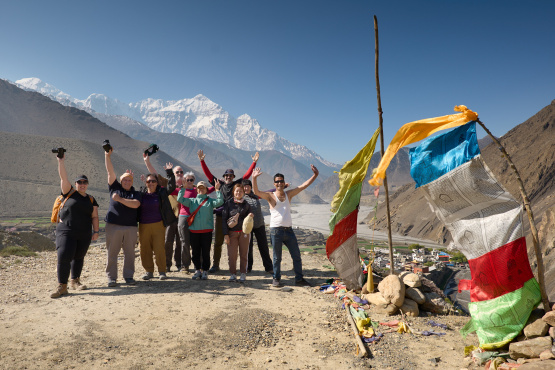

Monks tending the Lungda and flags
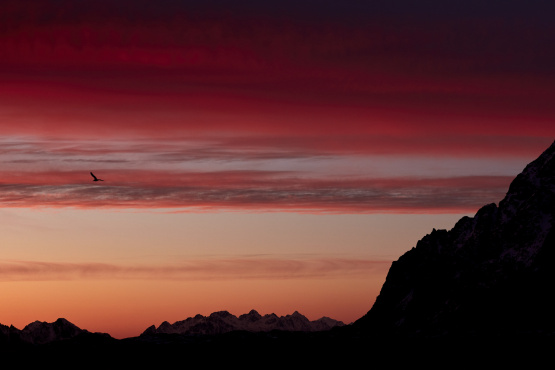
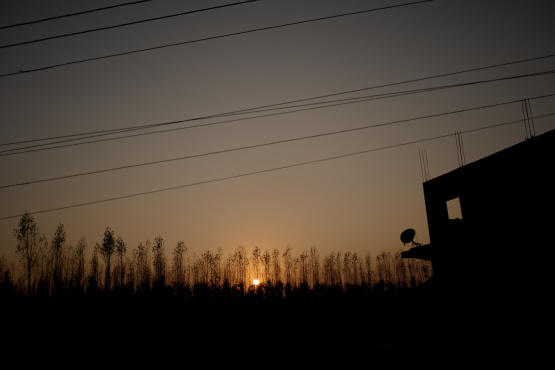
The town itself is far from glorious or quaint. It has undergone significant modernisation with satellite dishes, power lines and a particularly ugly main street that is almost devoid of style. Overlooking the town is a classic Tibetan monastery however, which commands views of the entire valley and provides ample inspiration for the camera during the golden hours around dawn and dusk.
The grounds of the monastery do not require a ticket to enter, but the more interesting subjects for me are found outside the walls anyway. Pilgrims walk clockwise around the monastery chanting their prayers, spinning their wheels and sharing a curious smiles with foreigners who take the trouble to rise early. These people are anything but camera shy, and likewise for the novices and monks inside the monastery. For the most part such religious centres are quiet places where contemplation and study mean you don't always see much of the residents. But patience is a virtue.
Yaks graze the hills above the temple, a stunningly placed lungda catches the last rays of sunset and the views overlooking the valley and township are worth an early walk before sunrise. In my case I set out in the darkness more than once to make sure I got whatever glimpses of light break through the fickle cloud cover.
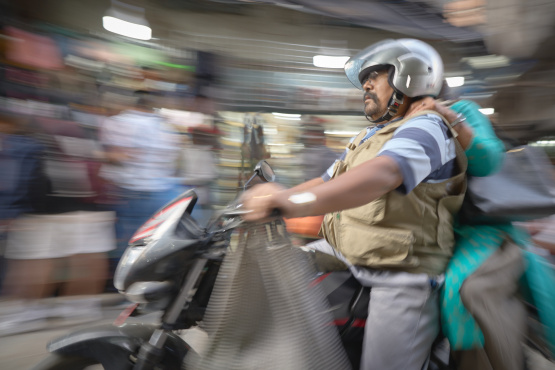
A met a few travellers on my visit who rented motorbikes in Litang to go exploring the countryside. The local police were unconcerned with details such as licenses, and for 100 yuan it was a well spent day. They spoke better Mandarin than I did and felt confident that neither the local nor the police would be bothered with details such as a drivers license or insurance.
There is an annual horse festival in Litang that has made the town just a little bit famous. I tend to avoid festivals as they usually make travel difficult, you have to fight your way past other photographers to work a shot and I prefer the peaceful side of towns anyway; it's not often that a festival brings out the true character of locals. I suspect the Litang horse festival might be one of those exceptions however, and one day I hope to find out for myself.
If you plan to visit the Litang Horse Festival best to do so with the help of a tour organiser who can secure accommodation and transport. This is the wild west of China after all, and it's a really long bus ride back to Chengdu.
Litang is noted among the Kham people because the lamas of Litang Chode Gompa are some of the most respected in all of Kham Tibet. Litang is the birthplace for no less than three Dalai Lamas and has been a site of resistance to the rule of Mao's Communist Party since 1956. The palpable issue of Tibet is not far below the surface here, and as such being a foreigner rather than Chinese helps when asking permission to take photos.
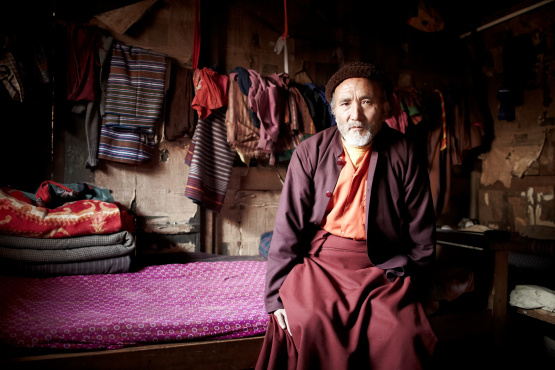
Whenever I met monks and novices inside the grounds of the monastery they were friendly and curious.
OBSERVING THE SKY BURIAL
The importance of the lamasery in Litang also makes it a notable site for traditional Tibetan sky burials. Families from distant counties travel to Litang so their departed can be given a good burial. The Chinese government permits Kham people to practice sky burials, a ritual where the body of the deceased is devoured by hungry vultures. The belief is that the spirit is free, and the earthly remains are returned not only to nature but are literally cast into the sky. Earth and water dominate the lives of Tibetan people, so it is fitting that in death they are at one with the air.
I was offered a chance to attend a sky burial. The manager of my guesthouse spoke good English and for a small fee would facilitate for one or two foreigners to observe the ritual. In the absence of the financial exchange this offer would be culturally generous, but something about paying for the privilege made me feel uncomfortable. Such a deeply significant event can easily be effected by even the most subtle of external presence, let alone the shutter of an SLR and a fat lens.
Ironically a group of Israeli backpackers decided to gate-crash the ritual on the morning I attended, offending the lamas, the man in charge and no doubt the family who's tolerance of voyeurs was tested to the limit. I had specific permission to be present and was allowed to listen to the prayers from 20 metres away. I chose not to take photos of the significant details.
For me Litang was a unique town to visit at the end of a very rocky road. It takes two days by bus to reach the town from Chengdu, and just as many to move forward to the Yunnan city of Zhongdian (Xiang-Ge-Li-La). It feels remote, it feels like you've left the planet and wont be back for a long long time. Yet there are a handful of restaurants in town that have menu written in English and a few guesthouses offering basic rooms at good rates.
The view from the monastery looking back over the town at sunrise is incredible. The entire valley unfolds with the light and if the clouds are behaving themselves you get something to play with. During my few days in town the weather was typically broken clouds of a morning, clearing during the day as the valley warmed up and then clouds would tumble back across the mountains before dark.
The shifting skies produced many unique effects with the light, so every day was a new inspiration for me and the camera.
GETTING THERE
Litang is two days driving from Chengdu. Buses make the 8 hour journey from Chengdu to Kangding, then another 10 hours from Kangding to Litang. Kangding itself is almost without interest, having been turned into yet another typical Chinese city. Remnants of the town's former character can be found if you look hard enough, and Tibetans are readily seen as you walk the streets, but Kangding is little more than a necessary overnight stop for most photographers.
Bus tickets for each journey should be bought the day before you travel. A few words from your Mandarin phrasebook will do the trick. Accommodation options for Kangding are clearly outlined in both the Rough Guides and Lonely Planet. Mini van operators tout for business at Kangding bus station and will try to tempt you with over priced transport and over priced rooms. Don't believe them when they say Litang is a 4 hour drive, it isn't and never will be! The bus is faster and cheaper.